
INTERVIEW
Introduction
Every student has experienced two types of lecturers, the one who inspires learning and the one who makes every class feel like survival. This raises an important question: what truly makes a lecturer good according to students?While qualifications and subject knowledge matter, students often believe that being a good lecturer goes beyond simply knowing the course content. It involves communication, fairness, attitude, and the ability to create an environment where students can actually learn.
Effective Teaching and Communication
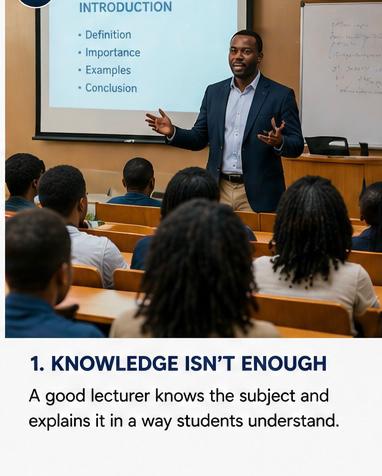
One of the most common qualities students value is the ability to teach effectively. A lecturer may be highly intelligent, but if students leave the classroom confused, then something important is missing.Good lecturers know how to break down difficult topics into simple explanations. They use examples, relatable scenarios, and clear communication to help students understand concepts better.For many students, knowledge alone is not enough; the real skill is being able to pass that knowledge across.
The Importance of Interactive Teaching
Students also respond better to interactive teaching methods. Rather than reading slides word for word or speaking for hours without engagement, effective lecturers involve students in the learning process.They ask questions, encourage discussions, and create opportunities for participation. This keeps students attentive and makes learning more enjoyable.When students feel included, they are often more motivated to learn.
Attitude and Approachability
Another major factor is attitude. Many students believe a lecturer’s personality can strongly affect learning outcomes.If a lecturer is overly harsh, disrespectful, or intimidating, students may become afraid to ask questions or participate in class. On the other hand, lecturers who are approachable, patient, and respectful create a safer learning environment.Students learn better when they feel comfortable asking for help without fear of embarrassment.
Fairness and Transparency
Fairness is another quality students consistently mention. A good lecturer should grade objectively, avoid favoritism, and be transparent about how scores are calculated.When students believe assessments are fair, they are more likely to trust the lecturer and stay motivated. However, perceived unfair treatment can discourage students and damage morale.Respect, many students say, should never be one-sided.
Balancing Discipline and Support
Interestingly, students do not necessarily reject strict lecturers. Many believe a lecturer can be strict and still be considered good, as long as the discipline is fair, respectful, and focused on helping students grow.A strict lecturer who explains lessons clearly, sets high standards, and supports students can still earn deep respect.The key is balance: discipline with understanding.
The Lasting Impact of Good Lecturers
Many students can remember at least one lecturer who positively changed their academic journey. Sometimes it is the lecturer who explained lessons step by step, encouraged confidence, or showed patience when students struggled.These experiences show that good teaching can shape not only grades, but also self-belief and motivation.
Key Qualities of a Good Lecturer
According to students, a good lecturer should possess: Strong communication skills, effective teaching methods, patience and approachability, fairness and transparency, respect for students, proper preparation, balance between discipline and support.
Conclusion
In the end, students want more than someone who simply covers the syllabus. They want lecturers who help them understand, grow, and succeed.A good lecturer does not just teach a course; they leave a lasting impact.
