
FEATURE
Introduction
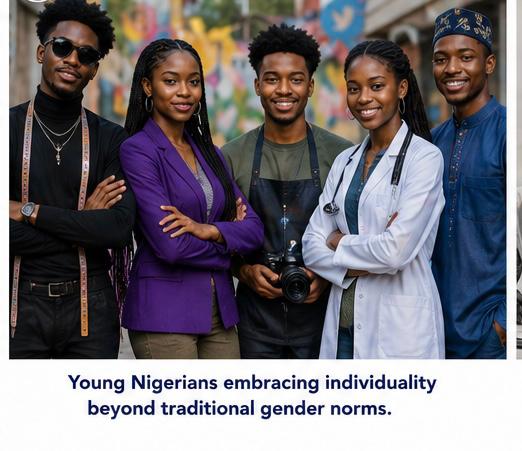
Across Nigeria, a quiet but powerful shift is taking place. Young people are challenging long-standing gender norms and redefining what it means to be male or female. Activities and roles once considered unusual, such as boys engaging in fashion or girls excelling in science, are becoming increasingly accepted in everyday life.
Traditional Gender Expectations
For many years, society followed traditional expectations. Boys were often expected to grow into strong providers and leaders, while girls were prepared for nurturing roles as wives and mothers. These ideas were deeply rooted in culture, religion, and family structures, leaving little room for difference.Today, however, a new generation is beginning to see things differently.
Factors Driving the Change
Modern Nigerian youths are growing up in a more connected and informed world. Through the internet, education, and global media, they are exposed to different perspectives on identity, equality, and personal freedom. As a result, many young people are questioning outdated beliefs and embracing a more flexible understanding of gender roles. Increasingly, they believe that talents, interests, and emotions should not be limited by whether someone is male or female.
Freedom to Choose Based on Ability
This change is helping young people choose paths based on passion and ability rather than social pressure.The shift is already visible in schools and social spaces. More girls are actively participating in science, technology, sports, and leadership programs. At the same time, boys are embracing skills traditionally linked to domestic life, creativity, or caregiving.
Redefining Masculinity and Femininity
Young men are also becoming more open about emotional expression and mental health, moving away from the old idea that masculinity must always be rigid and emotionless.These changes are creating healthier, more balanced identities for both boys and girls.
The Influence of Social Media
One of the biggest drivers of this transformation is visibility. Social media has given young people access to voices that challenge stereotypes and celebrate individuality. By seeing role models who break traditional norms, many Nigerian youths feel inspired to pursue careers, hobbies, and lifestyles that truly reflect who they are.Platforms like Instagram, TikTok, YouTube, and X have become spaces where conversations about equality and self-expression continue to grow.
Challenges and Resistance
Despite this progress, resistance still exists. Many young people continue to face criticism from family members, religious communities, or peers who strongly hold traditional views. Boys may be discouraged from pursuing fashion, arts, or caregiving roles. Girls may be questioned for entering male-dominated fields such as engineering, politics, or technology.However, rather than rejecting tradition completely, many youths are choosing dialogue, slowly encouraging understanding and acceptance.
The Future of Gender Roles in Nigeria
Looking ahead, this shift could have a powerful impact on Nigeria’s future. More balanced gender roles may lead to stronger families, inclusive workplaces, and a society that values individual potential over outdated expectations.Women may take on greater leadership roles, while men may feel freer to participate in caregiving, parenting, and emotional support.Ultimately, this transformation is not about abandoning culture; it is about allowing culture to grow with the times.
Conclusion
As this generation matures, it is clear they are building a future where opportunities are defined not by gender, but by talent, ambition, and personal choice.
