
AN EXPLAINER
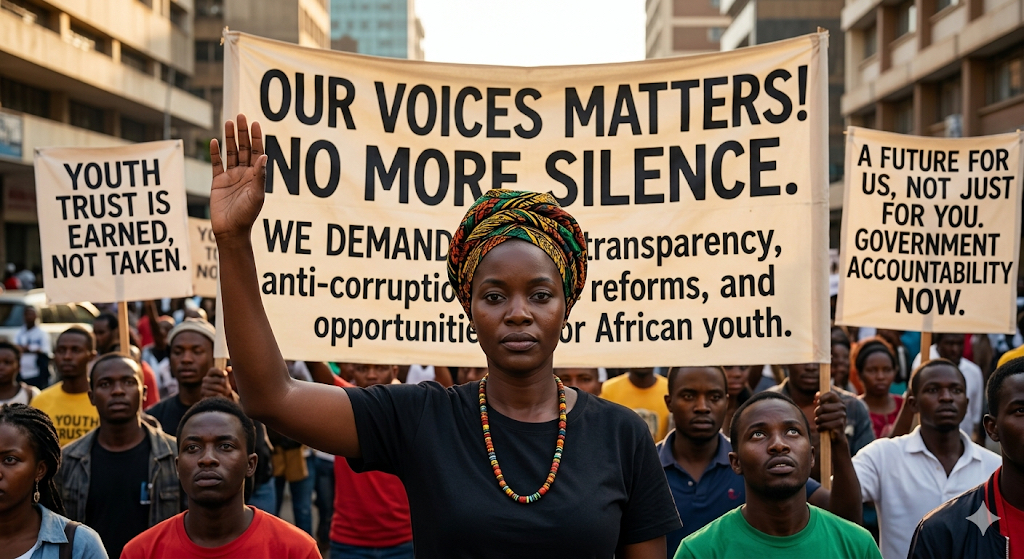
Core problem
A deep and growing trust deficit between African youth and their governments. Young people believe their leaders do not have their best interests at heart. This is not apathy, it is a rational response to repeated betrayal.
Youth disengage from voting and public service.
Frustration turns to protest or, in extreme cases, non-state violence.
Governments lose the energy, ideas, and productivity of their largest demographic.
Cause
Broken campaign promises Politicians pledge jobs, loans, skills training, then abandon or mismanage programs once in office.
Structural exclusion Youth are blocked from participating in decisions that claim to be about “their future.”Unequal treatment under the law Young protesters face harsh police action; corrupt officials stay free and even get promoted.
Viral awareness of injustice Social media spreads video evidence of abuses within hours; official denials are slow and hollow.
Visible corruption in contracts Government jobs and tenders go to connected older figures, while educated youth remain jobless for years.
Actor Accountability
Elected officials (presidents, legislators, local chairs) Accountable for every unfulfilled youth-related pledge. They control budgets, contracts, and policy design. Civil service & procurement officers Accountable for directing youth program funds and tenders to connected insiders instead of qualified young people.
Law enforcement leadership Accountable for using force on young protesters while ignoring officials who steal public money. Political parties Accountable for using youth as campaign props and excluding them from meaningful decision making after elections.
Media and civil society Accountable for failing to track and publicly score every youth promise before and after elections.
Recommendations
Publish youth budget spending online Every ministry publishes quarterly where youth funds went, in plain language and open data format.Create independent complaint systems Whistleblower hotlines and youth review boards with power to investigate broken promises.
Involve youth in policy design from the start Mandate youth councils with veto power over programs meant for them.Respond publicly to one young person’s question A simple weekly video reply from a minister to a citizen’s query low cost, high respect.
“Trust is built when a young person applies for a government program and actually receives help.Until that happens regularly, the deficit remains urgent.
For young people
When was the last time a government promise affected your life positively or negatively? Share without names. Just the gap between words and reality.
For older/mid-career adults:
Did you ever trust your government when you were 22? If yes, what changed? If no, what kept you participating anyway?
For anyone:
if a government could do ONE small, honest thing this month to prove it sees you not a speech, not a new agency what would that one thing be?
Pick one youth focused promise made in your country’s last election. Find the document, find the official responsible, and ask one public question: ‘Where is the money?’ Post the reply or the silence online. That is not protest. That is accountability.
Governments say they want trust. But trust is not a slogan it’s a receipt. What would a trustworthy government do differently starting tomorrow? Name three specific, visible actions.
