
A FEATURE
The Problem
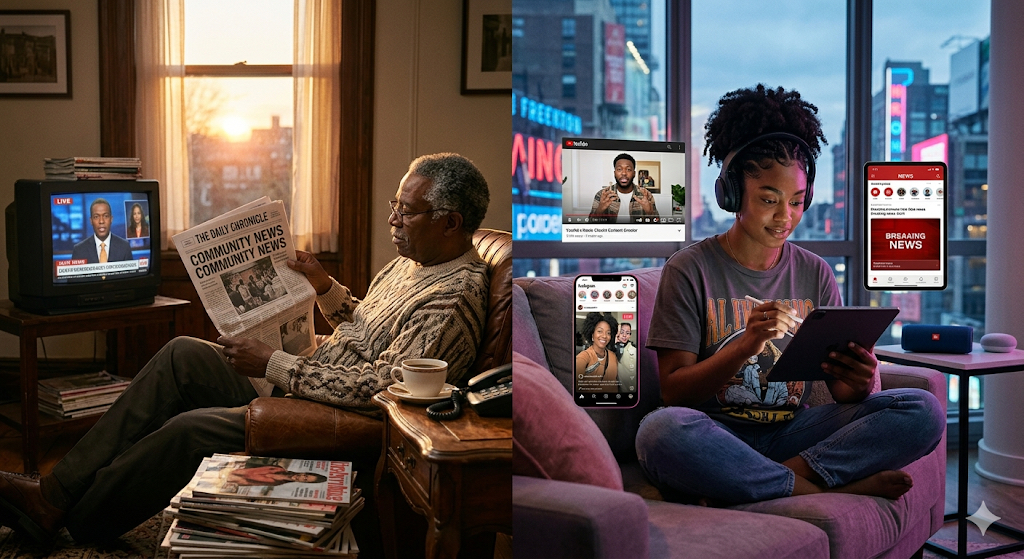
The core problem is not “old media dying” but a dangerous credibility divide that threatens public trust and information accuracy across Africa.
While the script highlights a healthy blending of media, the underlying problem is unequal access to verified information. Two parallel information systems now exist:
Traditional media (trusted, slower, often financially fragile) reaches older, rural, less data-connected populations.New media (fast, interactive, but weakly regulated) reaches urban, younger, data-connected populations, but amplifies misinformation faster than fact-checkers can counter.
This leads to:
Panic from fake news (e.g., WhatsApp kidnapping rumors).Corruption exposure alongside unverified accusations.Economic collapse of trusted outlets, leaving gaps that influencers (without editorial standards) fill.
Causes
High data costs & unreliable electricity Traditional media still leads where data is expensive; new media only supplements. Economic shift in ad revenue Brands move budgets from newspapers/radio to influencers and targeted social ads.Weak editorial guardrails on new media WhatsApp and TikTok allow instant spread of unverified stories (e.g., school kidnapping panic).
State control or cash-strapped traditional outlets Some corruption goes unreported by traditional media out of fear or lack of resources. Generational consumption habits Urban youth check Twitter/TikTok before any TV bulletin.Language and trust mismatch Local-language radio has deep trust; new media’s speed outruns that trust in crises.
Actor Responsibility
Governments (especially where state-controlled media exists) For suppressing corruption stories, forcing citizens onto unverified new media. Tech platforms (WhatsApp, TikTok, X) For algorithmic amplification of speed over accuracy, and weak local-language fact-checking.
Brands & advertisers For pulling budgets from traditional media without funding digital literacy or fact-checking. Media owners (traditional) For failing to adapt early to hybrid models (e.g., radio without WhatsApp integration). Citizen journalists & influencers For sharing unverified content without “verify first” discipline.Audiences For not cross-checking news between radio and social media before sharing.
Recommendation
For traditional media: Adopt a hybrid first model: every radio bulletin gets a 60-second WhatsApp voice note summary; every newspaper story gets an Instagram Reel teaser.
Monetize trust: offer paid WhatsApp subscription channels for verified local news (low data cost, high trust).Partner with fact-checkers (e.g., Africa Check, Pesa Check) to label and re-broadcast corrections on FM.
For new media platforms: Introduce verification delays for crisis keywords (kidnapping, election, outbreak) auto-flag posts until local radio/print confirmed.Fund community reporters in rural areas to feed into WhatsApp fact-checking bots.
For governments & regulators: Subsidize data for accessing traditional media apps (e.g., free data for official radio station streams).Enforce influencer disclosure rules without censoring legitimate exposés.
For audiences Adopt a personal two-source rule: one traditional (radio/paper), one new media (Twitter/WhatsApp) before sharing.
Youth: Teach an elder in your family how to check a TikTok rumor against a radio news bulletin. Elder: Teach a youth why radio remains credible even when it’s slower.
The village square and the smartphone screen are not enemies. But without deliberate action checking sources, funding trusted outlets, holding platforms accountable we will end up with the worst of both worlds: slow lies from old media and fast lies from new media. Be a hybrid citizen: listen, then verify, then share.
