
AN EXPLAINER
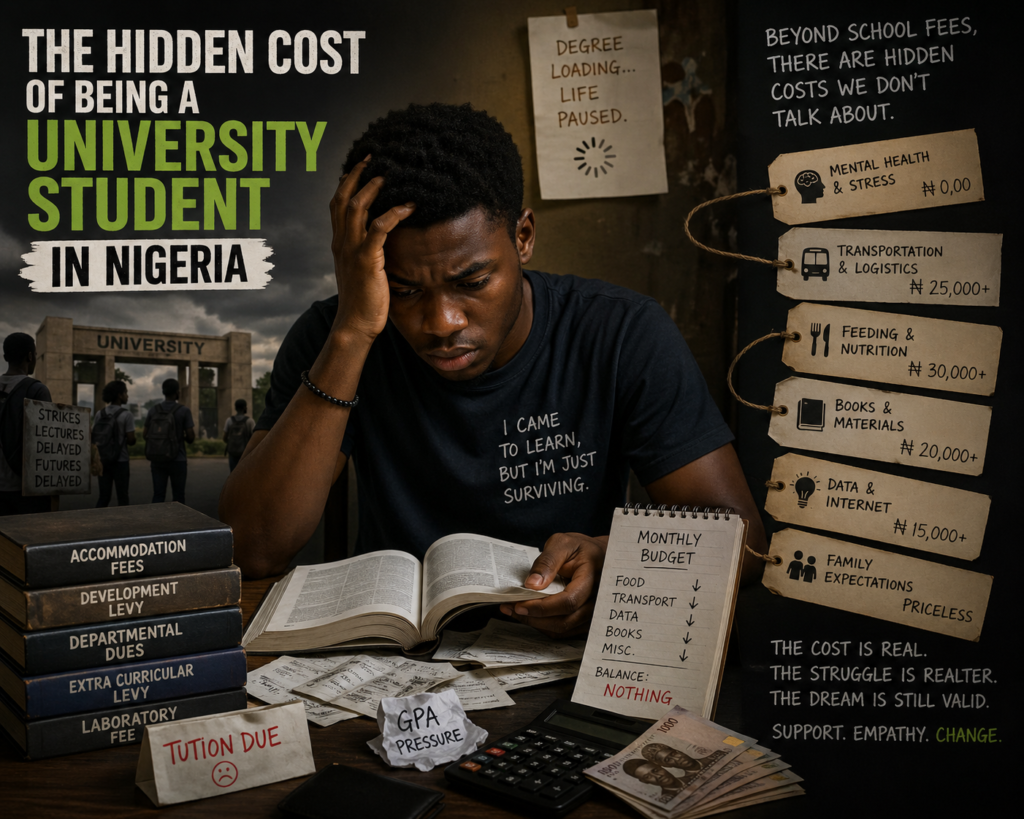
University education in Nigeria is often presented as a pathway to upward mobility. However, for many students, the reality extends far beyond tuition fees, revealing a network of hidden financial and psychological burdens that shape their academic experience.
Across federal and state universities, students face rising costs in accommodation, transportation, feeding, and academic materials. In many institutions, on-campus housing is insufficient, forcing students into expensive private hostels where rent can exceed ₦150,000 per session. Transportation costs have also surged due to fuel price increases, placing additional strain on already limited student budgets.
According to reports by the National Bureau of Statistics (NBS), inflation in Nigeria has significantly affected the cost of living, with food prices rising sharply in recent years. For students, this translates into skipped meals, poor nutrition, and declining concentration in class.
Beyond physical needs, access to digital resources remains uneven. Many students struggle to afford reliable internet data, limiting their ability to participate in online learning, access research materials, or meet academic deadlines. This digital divide directly impacts academic performance and widens inequality among students.
The causes of these challenges are multifaceted. Underfunding of the education sector has led to inadequate infrastructure, including insufficient hostels and learning facilities. At the same time, poor economic policies and inflation continue to erode the purchasing power of students and their families.
Responsibility lies with multiple stakeholders. Government authorities have failed to provide adequate funding and regulate student welfare conditions. University administrations often do not offer sufficient support systems, while private hostel owners exploit high demand with little oversight. Together, these actors contribute to a system that places excessive burden on students.
To cope, many students turn to part-time jobs, small-scale businesses, or online hustles. While this demonstrates resilience, it often comes at the cost of reduced study time, academic stress, and in some cases, involvement in risky or exploitative activities.
Addressing this issue requires deliberate action. Increased funding for education, expansion of affordable student housing, and policies to stabilize the cost of living are critical. Universities should also invest in accessible digital infrastructure and provide support services for financially struggling students.
Ultimately, the hidden cost of being a university student in Nigeria is not just financial it is systemic. Until these issues are addressed, the promise of higher education will remain out of reach for many.
