
On a typical campus morning, lecture halls fill up, deadlines draw closer, and students move quickly from one
class to another. Beneath this daily routine lies a silent reality — academic pressure, financial stress, social
expectations, and the constant demand to succeed. In the middle of it all, one practice is becoming increasingly
important: self-care. Every day, students wake up to alarms, assignments, group discussions, and examinations.
Some balance their studies with part-time jobs, leadership roles, or family responsibilities. In such a fast-paced
environment, personal well-being is often pushed aside. Many students believe that working nonstop guarantees
success. However, without rest and intentional care, stress builds up, leading to burnout, anxiety, poor academic
performance, and even health problems. Self-care is not laziness. It is not a waste of time. It is a necessary habit
that helps students stay balanced, focused, and motivated
What is Self-Care?
Self-care refers to the deliberate actions individuals take to maintain and improve their physical, mental, and emotional health. For students, it means building habits that protect well-being while supporting academic performance. In today’s competitive academic environment, self-care is no longer a luxury it is essential for survival and success.
The Pressure Behind the Books.
From tight assignment schedules to exam anxiety, students frequently experience overwhelming stress. The pressure to meet high expectations can take a toll on both mental and physical health. When personal well being is neglected, fatigue increases and concentration decreases.
Growing awareness of these challenges has encouraged many students to adopt conscious self-care routines to maintain balance.
Physical Self-Care: Protecting the Body.
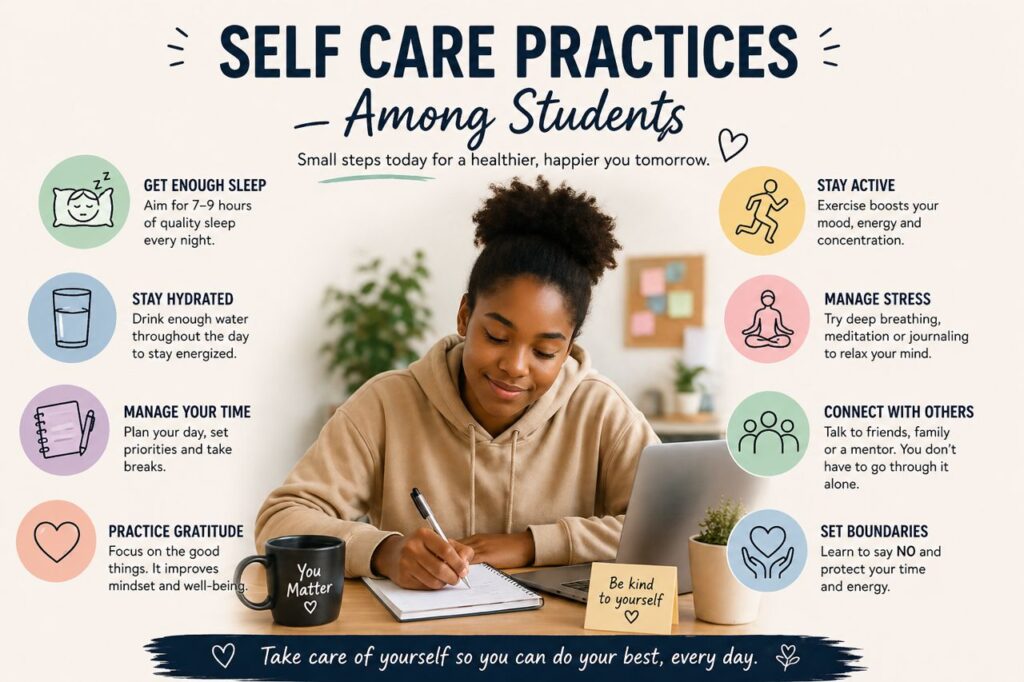
One of the most important aspects of self-care is maintaining physical health. Adequate sleep, though often sacrificed for late-night study sessions, is crucial for memory, focus, and overall productivity. Students who prioritize rest tend to perform better academically. Regular exercise also plays a vital role. Jogging, going to the gym, or participating in sports helps reduce stress and improve mood. In addition, healthy eating habits such as drinking enough water and limiting junk food contribute to sustained energy levels throughout the day.
Mental and Emotional Well-Being.
Beyond physical health, students are increasingly paying attention to their mental and emotional needs. Practices such as meditation, journaling, and deep breathing exercises help manage anxiety and improve emotional stability. Many campuses now provide counseling services, and more students are seeking therapy without stigma. Talking to trusted friends, mentors, or counselors can ease emotional burdens and reduce feelings of isolation. Taking breaks from social media has also become a modern form of self-care, protecting students from unhealthy comparisons and digital overload.
Social and Spiritual Balance.
Healthy relationships are another important pillar of student self-care. Spending quality time with supportive friends, joining campus clubs, or participating in group activities fosters a sense of belonging and community. For some students, spiritual practices such as prayer, reflection, or attending religious gatherings provide comfort and
guidance. These activities help them remain grounded during stressful academic periods.
Challenges to Practicing Self-Care.
Despite its importance, many students still struggle to prioritize self-care. Heavy workloads, financial limitations,and societal pressure to constantly “hustle” can make rest feel undeserved. However, experts consistently
emphasize that true productivity thrives when well-being is protected.
Time Management as a Form of Self-Care
Interestingly, effective time management is one of the strongest forms of self-care. Creating study schedules,setting realistic goals, and avoiding procrastination reduce last-minute panic and unnecessary stress. Planning
ahead allows students to create space for relaxation and personal activities without guilt.
A Culture Shift on Campus.
Today, conversations about mental health and balanced living are more open than ever. Student organizations, workshops, and awareness campaigns continue to promote healthy habits. Slowly but surely, self-care is becoming an accepted and encouraged part of campus culture. Self-care practices among students are not about indulgence; they are about sustainability and success. Academic achievement should not come at the cost of health and happiness. When students intentionally care for their bodies, minds, and emotions, they build resilience, improve performance, and prepare themselves for life beyond campus. In simple terms, when students take care of themselves, they give themselves the best chance to thrive both in school and in life.
