
A FEATURE
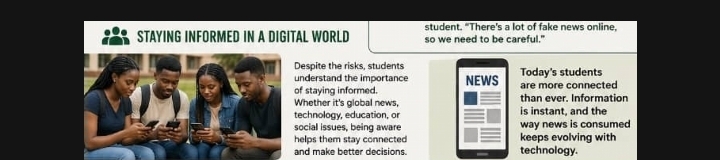
The morning newspaper and the evening news broadcast are relics of another era. For today’s students, news arrives in fragments a trending tweet, a 60-second video, a push notification glanced at between classes. The way young people consume information has been fundamentally transformed, raising both exciting possibilities and serious concerns.
Social media platforms particularly Instagram, TikTok, and X (formerly Twitter) have become the primary newsrooms for most students. A breaking story often reaches a university campus through a viral meme or a shared reel long before it appears on a traditional outlet’s homepage. News is no longer sought; it is encountered.
This passive consumption model means students are frequently exposed to headlines without context. Algorithms curate feeds based on engagement rather than accuracy or relevance, creating personalized information bubbles that reinforce existing beliefs. A student interested in climate advocacy, for instance, may only receive news that confirms that worldview, while opposing perspectives are quietly filtered out.
Yet the picture isn’t entirely bleak. Many students demonstrate a sophisticated ability to cross-check information across multiple platforms, flag misinformation within peer groups, and engage in real-time global conversations. Podcasts and newsletter platforms like Substack have also gained traction among students seeking deeper, more analytical reporting.
The challenge facing educators and media institutions alike is not simply getting students to consume more news but helping them consume it better: with critical eyes, diverse sources, and an understanding that a 15-second clip is rarely the whole story.
