
A FEATURE
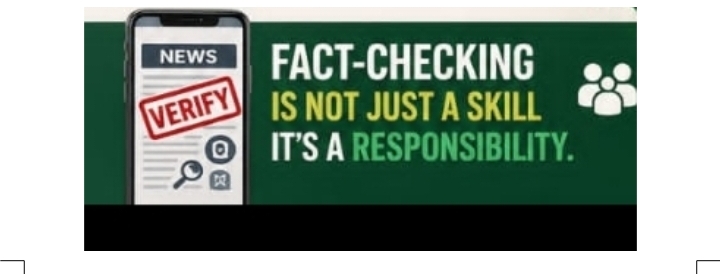
Every election season, young people become prime targets for political messaging at school assemblies, on social media feeds, and through campaign advertisements engineered to provoke emotion rather than inform. The claims can sound authoritative: unemployment figures, crime statistics, policy promises, historical comparisons. But how many of them hold up under scrutiny?
The short answer: not nearly enough.
Research from the Reuters Institute and Stanford’s civic literacy studies consistently shows that young people between the ages of 15 and 25 are among the most exposed and least equipped to evaluate political misinformation. The problem is not intelligence. It is exposure: algorithms on platforms popular with youth reward emotional, shareable content over verified fact. A false statistic can reach a million feeds before a correction is even published.
“The goal of political misinformation is not to convince it is to confuse. A confused voter is an easily led voter.”
Fact-checking is not about picking political sides. It is a discipline that applies equally to all parties and all claims. The method is straightforward: identify the specific claim, trace it to its primary source, check the date and context of the data, and ask what has been left out. A rising crime figure means nothing without knowing the baseline year. A job creation promise means nothing without a stated mechanism. A historical comparison is dishonest if it ignores contradicting evidence.
Reputable tools are freely available. Platforms such as PolitiFact, FullFact.org, and AFP Fact Check rate claims on a verifiable scale. Official government statistical portals census bureaus, treasury departments, health ministries publish primary data that politicians frequently misuse or misquote.
The most powerful habit, however, costs nothing: pause before sharing. Ask who benefits from this claim being believed. Ask what evidence is offered, not just asserted. Democracy does not require perfect citizens but it cannot function when its youngest participants accept political speech at face value.
The next time a politician speaks to you, bring a question. They owe you an answer.
