
AN OPINION
Social media has become one of the biggest influences on young Nigerians today. Many young people now depend on platforms like TikTok, Instagram, X, and Facebook for news, entertainment, trends, and discussions about important issues.
However, many users do not realize that the content they see online is not random. Social media algorithms carefully select posts based on users’ likes, comments, searches, and viewing habits.
As a result, algorithms are gradually shaping how young Nigerians think, what they believe, and how they react to issues online. This influence affects opinions, lifestyle choices, political views, and even social behavior.
One major cause is the increasing dependence on social media as a primary source of information. Many young Nigerians spend several hours online daily, making digital platforms highly influential in their lives.
Another cause is the design of social media algorithms themselves. These systems are built to keep users engaged for as long as possible by showing content they are likely to react to emotionally.
In addition, low levels of digital literacy make it difficult for some users to identify misinformation or manipulated content online. Many people believe and share information without verifying the source.
The fast spread of viral content, celebrity culture, and online trends also contributes to unrealistic expectations and unhealthy comparisons among young people.
Social media companies are often criticized for creating algorithms that prioritize engagement over accuracy. Emotional, controversial, or sensational posts usually receive more attention because they generate reactions and increase online activity.
Content creators and influencers also play a role by spreading misleading information, fake lifestyles, or unverified stories to gain views and followers.At the same time, some users contribute to the problem by sharing content without fact-checking or questioning its authenticity.
Government agencies and educational institutions have also been criticized for not doing enough to promote digital literacy and media education among young Nigerians.
Young Nigerians need to become more aware of how algorithms work and understand that social media feeds are personalized to influence engagement.
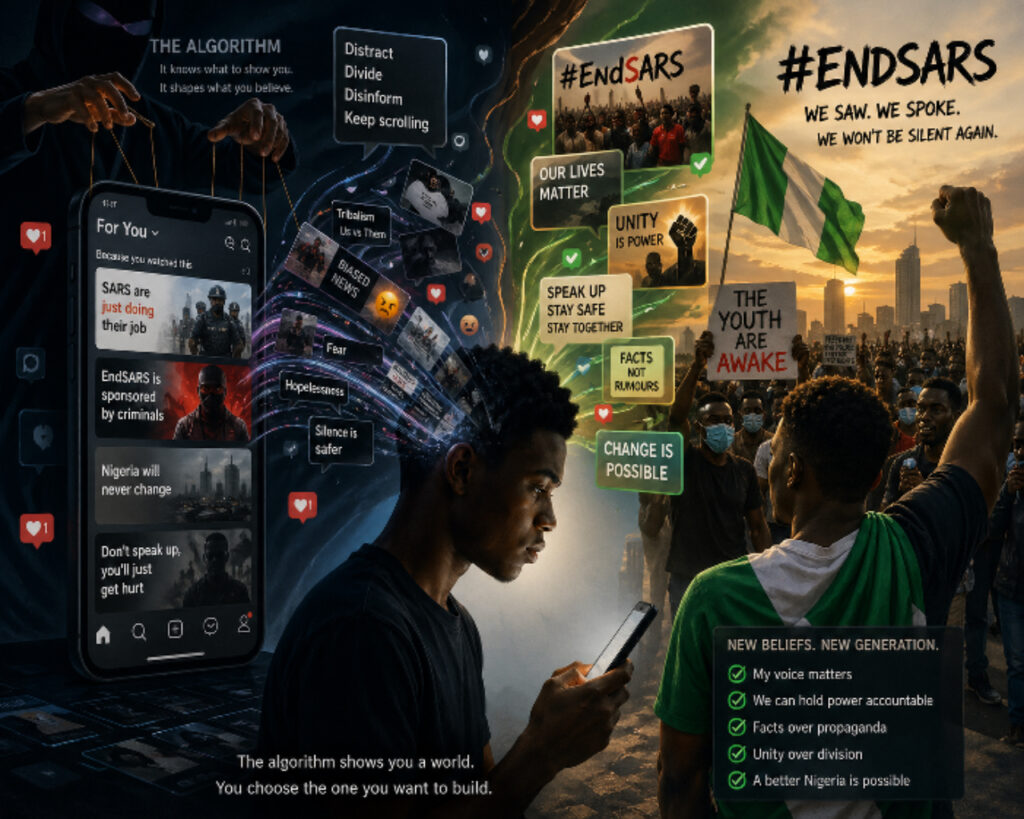
Digital literacy education should be encouraged in schools and communities to help young people identify fake news, misinformation, and online manipulation.
Users should also learn to verify information from reliable sources before believing or sharing it online.
Social media companies should become more transparent about how their algorithms operate and take stronger action against misinformation and harmful content.
Finally, young people should try to expose themselves to different opinions and viewpoints instead of relying only on content that agrees with their beliefs.
Algorithms clearly play a powerful role in shaping online conversations and influencing what young Nigerians believe. While social media has created opportunities for learning, awareness, and communication, it has also increased the spread of misinformation and online pressure.
This raises important questions:
- Are young Nigerians too dependent on social media for information?
- Should social media companies be held more accountable for misinformation?
- Is digital literacy now as important as traditional education?
- How can users balance entertainment with critical thinking online?
As technology continues to grow, understanding how algorithms influence opinions may become more important than ever before.
