
AN EXPLAINER
Many people outside the university environment believe campus life in Nigeria is easy, enjoyable, and free from serious challenges. Social media content often paints student life as full of parties, fashion, and freedom.
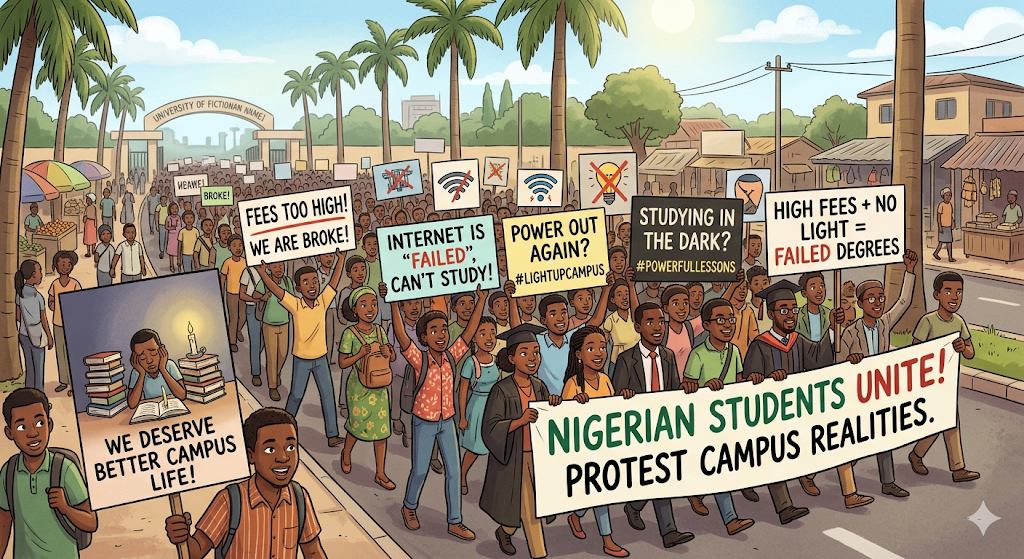
However, the reality on many Nigerian campuses is different. Students face academic pressure, financial hardship, unstable academic calendars, poor hostel conditions, insecurity, and emotional stress. These realities are often ignored or misunderstood by the public.

As a result, many students feel their struggles are not taken seriously, while false narratives continue to spread about university life in Nigeria.
One major cause of these misconceptions is social media. Many online posts only show the exciting parts of campus life while hiding the difficult realities students experience daily.
Another cause is lack of proper public understanding of the Nigerian education system. People who are not students may not fully understand challenges such as overcrowded classrooms, strikes, accommodation shortages, or rising school fees.
Poor funding of universities also contributes to the problem. Limited government support affects facilities, hostel maintenance, electricity supply, water systems, and learning environments.
In addition, communication gaps between university authorities, students, and the public allow rumors and assumptions to grow.
The government and education authorities are often blamed for poor funding and inadequate support for tertiary institutions. Many public universities continue to struggle because of insufficient resources and unstable policies.
University management in some institutions has also been criticized for failing to address students’ welfare concerns quickly enough. Issues such as hostel conditions, sanitation, and academic stress sometimes remain unresolved for long periods.
Social media influencers and content creators also contribute to false impressions by presenting unrealistic views of campus life that do not reflect the experiences of average students.
At the same time, some students spread misinformation online, making it difficult for outsiders to separate facts from exaggeration.
Education experts recommend increased funding for Nigerian universities to improve facilities,accommodation, and learning conditions.
Universities should also improve communication with students and the public to reduce misunderstandings about campus realities.
Students are encouraged to use social media responsibly by sharing balanced and truthful experiences about campus life instead of promoting only unrealistic lifestyles.
There should also be more support systems for students, including mental health awareness, academic counseling, and financial assistance programs.
Finally, the public should avoid making assumptions about students and take time to understand the real challenges facing Nigerian campuses today.
Campus life in Nigeria is clearly more complex than many people believe. While students still find moments of fun and social connection, many also deal with serious academic, financial, and emotional pressures.
This raises important questions:
- Are Nigerian universities doing enough to support students?
- Has social media created a false picture of campus life?
- Should students’ welfare receive more national attention?
- What role should government and university authorities play in improving campus conditions?
Understanding these realities may help create better conversations about the future of higher education in Nigeria.
