
Opinion
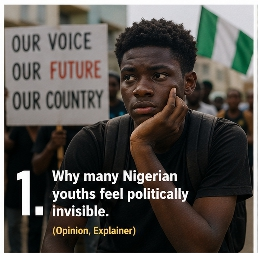
In recent years, youth political engagement in Nigeria has gained visibility, especially during movements like the End SARS protests. However, despite this surge in activism, many young Nigerians still feel politically invisible. This sense of invisibility stems from structural, institutional, and cultural barriers embedded in the political system.
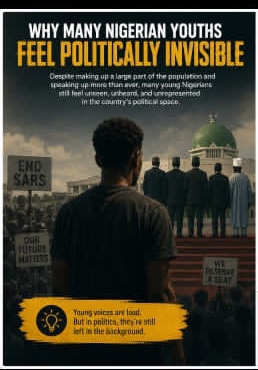
YOUTH NEGLECT
Firstly, representation remains low. Although youths make up a significant percentage of Nigeria’s population, political offices are still dominated by older elites. Policies like the “Not Too Young To Run” bill raised hopes, but in practice, young candidates often lack the financial backing and political godfathers needed to compete effectively.
DECISION MAKING
Secondly, decision-making processes are largely exclusionary. Youths are rarely consulted in policy formulation, and when they are, it is often symbolic rather than impactful. This creates a disconnect between government actions and youth realities—especially in areas like unemployment, education, and digital innovation.
