
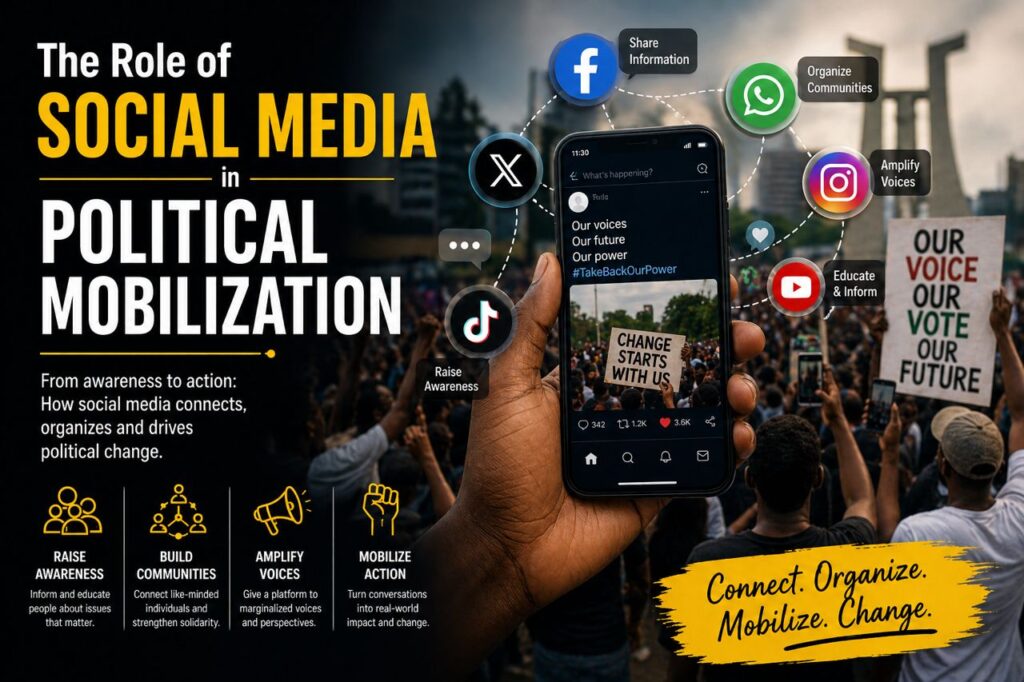
Social media has transformed the way people communicate, share information, and participate in political processes. In the digital age, platforms such as Facebook, X (formerly Twitter), Instagram,
and TikTok provide citizens with direct access to political news, debates, and campaigns. As a result, social media has become a powerful tool for political mobilization, shaping public opinion and encouraging civic participation.
What is Political Mobilization?
Political mobilization refers to the process of encouraging and motivating citizens to participate in political activities such as voting, protesting, campaigning, or advocating for social and political change. Traditionally, mobilization was carried out through rallies, newspapers, radio, and television broadcasts. However, the rise of social media has made it possible to reach large audiences quickly, directly, and more cost-effectively.
How Social Media Influences Political Mobilization.
- Information Dissemination – Social media enables rapid spread of political information, campaigns, and social issues.
- Engagement and Public Discussion – Users can interact, debate, and participate actively.
- Organization and Coordination – Helps organize protests, campaigns, and movements.
- Influence on Public Opinion – Viral content shapes perceptions and voting behavior.
Benefits
- Broader Reach
- Cost-Effective Communication
- Real-Time Updates
- Increased Civic Participation
Challenges
- Misinformation and Fake News
- Political Polarization
- Data Exploitation
- Cybersecurity Threats
Conclusion
Social media plays a significant role in modern political mobilization by spreading information, organizing action, and engaging citizens. While it offers many benefits, it also requires responsible use and critical thinking to avoid risks.
