
An Explainer
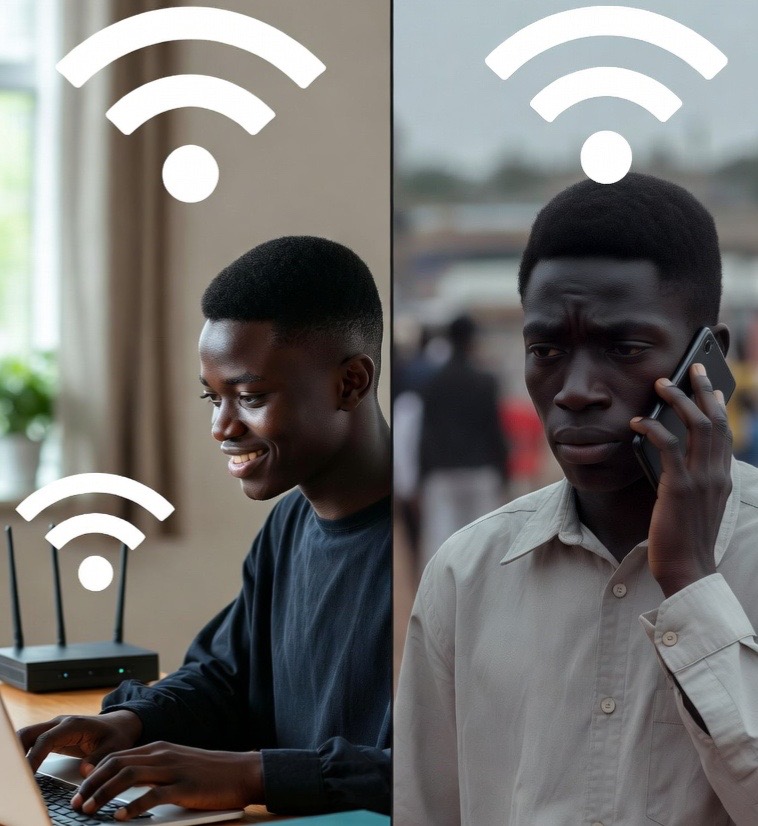
As Nigerian universities accelerate their shift toward digital learning platforms, e-assignments, online research databases, hybrid lectures, and AI-integrated tools in 2026, a persistent digital divide continues to create two classes of students: those who can fully engage and those perpetually struggling on the margins.
Understanding the Digital Divide:
This inequality spans access to devices (laptops/smartphones), affordable high-speed internet, stable electricity, and digital literacy skills. National internet penetration remains below 50%, with sharp rural-urban and income-based gaps. Urban students in Lagos, Abuja, or Benin City often enjoy relatively stable 4G/5G networks, while students in rural communities and many northern institutions face expensive data, frequent blackouts, and weak coverage. Research indicates that less than 20% of rural youth in northern states can use computers independently, and female students frequently encounter additional socio-cultural barriers to device ownership and unsupervised internet use.

Impact on Learning and Equity:
The consequences are profound. Students without reliable access miss live lectures, struggle with timely submissions, cannot effectively utilise research resources like JSTOR or institutional portals, and are excluded from group projects or scholarship opportunities. This directly contributes to lower academic performance, delayed graduations, and widened socio-economic inequalities. During and after the COVID-19 era, the gap became even more visible, with many vulnerable students unable to participate fully in remote or blended learning.
Current Efforts and Limitations:
Government initiatives such as the School Internet Initiative and partnerships with telecom operators have attempted to expand connectivity, particularly in educational institutions. Some universities have established ICT centres and limited free Wi-Fi zones. However, these efforts are often underfunded, overcrowded, time-restricted, or concentrated in urban centres, leaving many students, especially in Edo State and other semi-urban/rural campuses, underserved.
Practical Recommendations:
Sustainable solutions include subsidised or zero-rated data bundles for learning platforms, widespread deployment of solar-powered Wi-Fi hotspots and charging stations in hostels and faculties, compulsory digital literacy modules during student orientation, low-cost laptop loan schemes for needy students, and targeted interventions for female and rural learners.
In Conclusion
Internet access inequality is no longer a peripheral technical problem, it has become a core threat to educational equity, quality, and national development in 2026. With over 28 million children and youths lacking adequate digital learning opportunities nationwide, the digital divide risks producing a generation of graduates ill-equipped for a technology-driven economy. Nigerian universities, the Federal Government, NITDA, and private telecom providers must treat bridging this gap as a national emergency through coordinated, equitable, and sustained investments. Only when every student, whether in a bustling Benin City hostel or a remote village, enjoys reliable, affordable internet access can we claim to be building a truly inclusive, modern, and competitive higher education system. The future competitiveness of Nigerian youth depends on closing this divide urgently and decisively.
