
AN EXPLAINER
INTRODUCTION
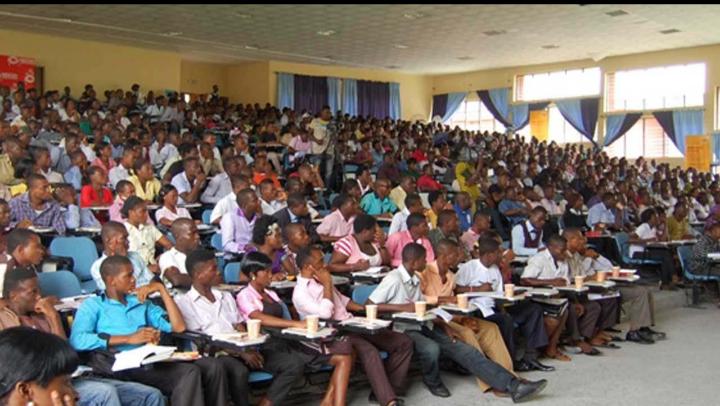
Walk into many university lecture halls today, especially in developing countries, and you will often find spaces filled far beyond their intended capacity. Students squeeze onto benches designed for fewer people, some stand at the back or sit on the floor, while others struggle to even hear the lecturer clearly. The noise level, combined with the physical discomfort, makes concentration difficult.
This is the reality of overcrowded university classrooms, a situation where the number of students exceeds what lecturers and available resources can effectively manage. While universities aim to admit more students in order to expand access to higher education, the quality of learning often suffers when lecture halls become too crowded.In a typical university setting, an effective lecturer-to-student ratio is expected to allow for interaction, discussion, and feedback.
However, in many institutions, a single lecturer may be responsible for hundreds of students in one course. In such an environment, teaching shifts from active engagement to one-way communication. Lecturers are often forced to deliver lessons quickly, with little or no opportunity to check whether students truly understand the material. The size of the classroom, availability of seats, and access to learning tools are often inadequate for such large numbers.
FACTORS AND IMPACT
Several factors contribute to overcrowded lecture halls in universities. Increased demand for higher education means that more students are admitted each year, but infrastructure expansion does not always keep up. Limited funding affects the construction of new lecture halls and the recruitment of additional lecturers. In some cases, there is also a shortage of qualified academic staff, which increases the workload for those already employed. Urban-based universities, in particular, experience higher pressure as students migrate to cities in search of better educational opportunities.
The impact of overcrowding on students is significant. One major issue is the lack of individual attention. In a lecture hall filled with hundreds of students, it becomes nearly impossible for a lecturer to address individual learning needs. Students who struggle academically may go unnoticed, while those who need deeper engagement are not sufficiently challenged. Participation also declines, as only a few students get the chance to ask questions or contribute to discussions. Over time, this reduces students’ interest, confidence, and overall engagement with their studies.For lecturers, overcrowded classrooms create serious challenges. Managing a large number of students in one space can be stressful and exhausting. Lecturers may find it difficult to maintain order, especially when students at the back are distracted or disengaged. Assessing students’ work, providing feedback, and tracking progress become overwhelming tasks. This often leads to fatigue and burnout, reducing lecturers’ motivation and affecting the quality of teaching delivered.
The physical classroom environment also plays a role. Lecture halls designed for smaller groups become uncomfortable and ineffective when overcrowded. Limited seating, poor ventilation, and insufficient learning materials make it difficult for students to focus. In some cases, students are forced to share textbooks or rely solely on verbal explanations, which limits their ability to fully grasp course content.Although some argue that large university classes can encourage independent learning or peer collaboration, these benefits are often limited without proper structure. In overcrowded settings, students are more likely to rely on rote memorization rather than critical thinking. Interaction between lecturers and students becomes minimal, and meaningful academic engagement is reduced.
CONCLUSION
In conclusion, overcrowded university classrooms present a serious challenge to effective learning. While expanding access to higher education is important, it should not come at the expense of quality. A truly effective university classroom is one where students can actively participate, engage with their lecturers, and fully understand what they are being taught. Until this balance is achieved, many students will attend lectures, but not truly experience meaningful learning.
