
A FEATURE
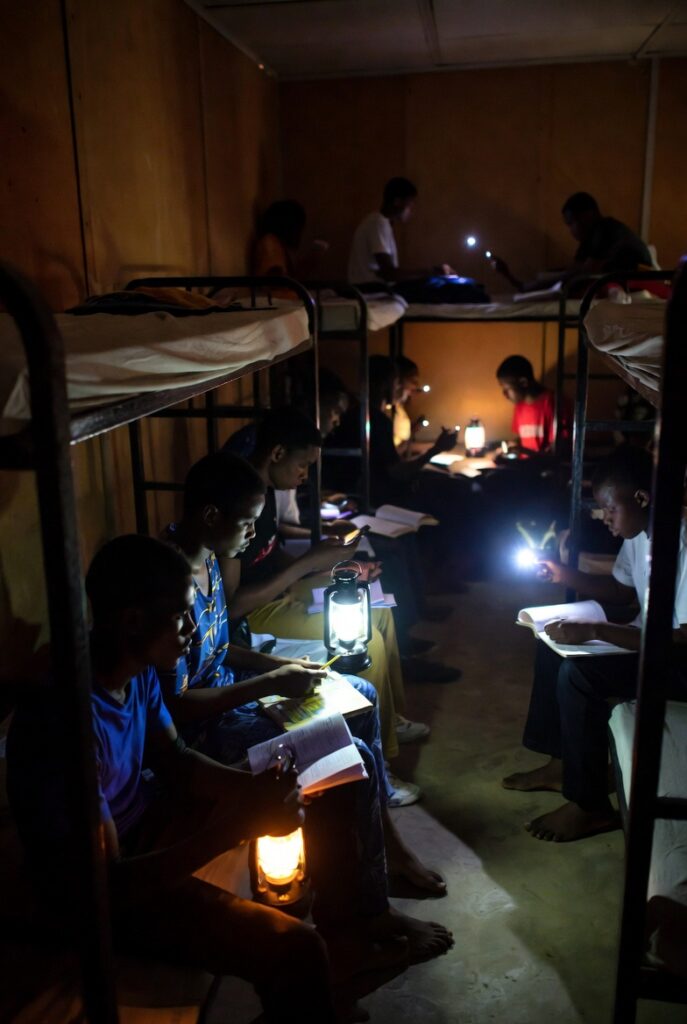
Nigeria’s higher education institutions operate amid chronic electricity shortages, characterised by frequent and prolonged power outages often referred to as “epileptic” supply. Public universities, which accommodate the majority of students, experience unreliable grid power due to national challenges in generation, transmission, and distribution. This infrastructural deficit significantly shapes daily academic and personal life on campuses. Students must adapt to study, conduct research, attend lectures, and manage personal needs without consistent electricity. While this situation presents serious obstacles, it also highlights the resilience and resourcefulness of Nigerian student.
Unstable electricity disrupts core aspects of university education. Lectures are frequently interrupted or cancelled when projectors, public address systems, or lighting fail. Laboratories and workshops become non-functional, hindering practical training in technical and scientific disciplines. Access to digital resources is limited: students cannot reliably use computers, access the internet for research, submit assignments, or participate in online learning platforms.In hostels and off-campus accommodations, students face darkness, poor ventilation during hot periods, difficulty charging mobile devices, and challenges preserving food. Night-time studying is severely restricted, forcing many to walk long distances to areas with power or study under streetlights. These conditions increase stress and anxiety, reduce study hours, delay project completion, and contribute to declining academic performance. Prolonged outages also raise safety concerns and affect overall well-being.
The primary cause is Nigeria’s systemic electricity supply crisis, marked by insufficient generation capacity relative to demand and inefficiencies in the national grid. Many universities depend on the public supply, which averages far below 24-hour availability. Institutional generators often exist but are constrained by high fuel costs and maintenance issues. Additional factors include rapid population growth in student hostels, inadequate investment in campus infrastructure, and the broader economic impact of relying on expensive diesel alternatives.
Nigerian students demonstrate considerable ingenuity in adapting to these conditions. Common strategies include:
Alternative Power Sources: Many rely on personal or shared generators (despite fuel expenses), rechargeable solar lanterns, power banks, and inverters. Some campuses have introduced limited solar installations that provide partial relief, particularly for lighting and device charging.
Time and Location Management: Students maximise daylight hours for study and practical work. They frequently move to campus libraries, lecture halls, or nearby locations with backup power during outages. Group study sessions in powered spaces are common.
Offline and Low-Tech Methods: Printed materials replace digital resources. Assignments are prepared manually or saved frequently to avoid data loss. Lectures are recorded (when possible) or summarised through peer notes.
Resource Sharing: Students pool resources for fuel, share charging points, and form support networks. Some engage in small businesses or hustles to afford personal solutions like solar lamps.
Health and Psychological Adaptation: Practices such as adjusting sleep patterns, physical activity, and peer interaction help manage stress, though these are imperfect solutions.
These adaptations enable students to persist in their studies, though they often come at personal and financial cost.
Multiple stakeholders contribute to the persistence of this challenge. Successive governments bear primary responsibility for the national power sector’s underperformance. University administrations manage limited resources but often lack sufficient funding for comprehensive backup systems. Fuel suppliers and maintenance contractors influence generator reliability. Students themselves sometimes contribute through overuse or vandalism of infrastructure, though this is secondary to systemic failures. Broader economic and policy constraints exacerbate the issue across public institutions.
Addressing this problem requires multi-level action. The government should prioritise reliable power supply to educational institutions through dedicated grid improvements or expanded renewable energy programmes, such as solar-hybrid systems. Universities must invest in sustainable campus-wide solutions, including larger solar installations and energy-efficient infrastructure.
Media literacy and awareness campaigns can promote responsible energy use. Fact-checking and information-sharing groups (including via platforms like WhatsApp) may help disseminate best practices. Students should continue advocating through unions for improved facilities. International partnerships and private sector involvement in campus energy projects could accelerate progress. Ultimately, every stakeholder from policymakers to individual students has a role in fostering more reliable learning environments.
In conclusion
Unstable electricity has transformed the student experience on Nigerian campuses into one of endurance and adaptation. While it has complicated academic pursuits and increased daily hardships, students continue to demonstrate remarkable resilience through innovative coping strategies. However, sustainable solutions are essential to transform higher education from a struggle for basic functionality into an environment conducive to excellence. Nigerians must engage in ongoing discussions: How can institutions better support students amid infrastructural challenges? What policy changes would most effectively address campus power crises? Should greater emphasis be placed on renewable energy adoption in universities? These conversations are vital for building a more effective and equitable education system.
