
AN INTERVIEW
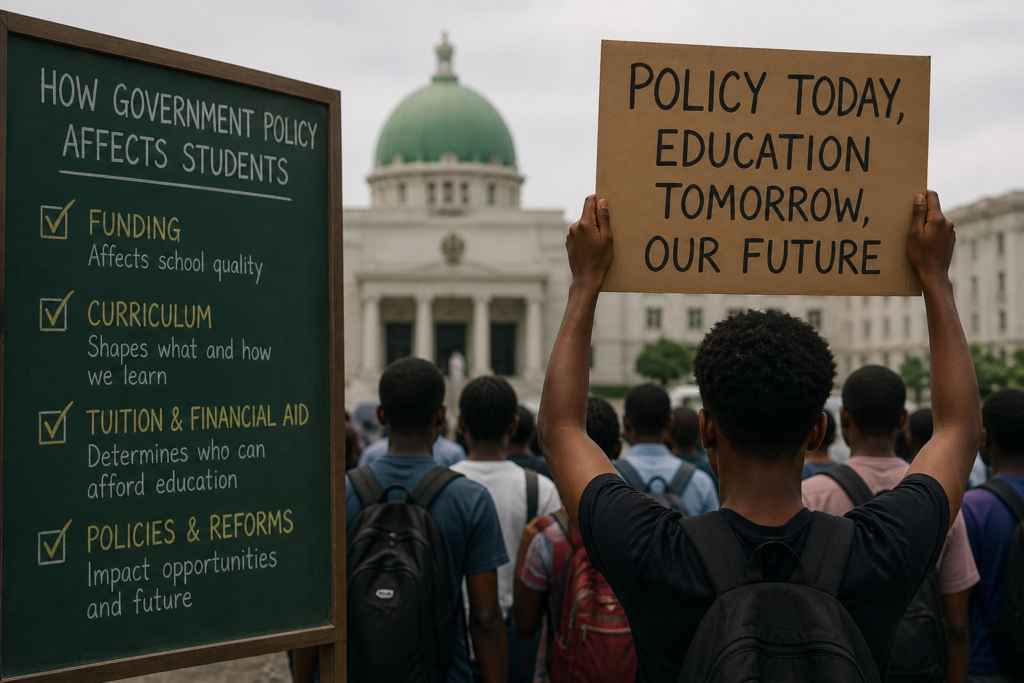
Government policies shape the reality of students in ways that are often invisible but deeply felt. From the moment a student steps into a classroom to the day they graduate, policy decisions influence the quality of education they receive, the opportunities available to them, and even the direction their future may take.
One of the most immediate ways policy affects students is through access to quality education. Government funding determines the condition of classrooms, availability of learning materials, and the number of qualified teachers in schools. In many cases, underfunded institutions struggle with overcrowded lecture halls, outdated resources, and limited access to technology. On the other hand, well-funded systems tend to provide a more conducive learning environment, giving students a stronger academic foundation.
Affordability is another critical area shaped by policy. Tuition fees, scholarship programs, and financial aid systems are all products of government decisions. When policies support reduced fees or provide grants and loans, more students are able to pursue higher education without financial strain. However, when education becomes expensive and support systems are weak, many capable students are forced to drop out or never enroll at all. This creates a cycle where talent is limited not by ability, but by economic barriers.
Government policies also determine what students learn and how they learn it. Curriculum standards, accreditation requirements, and educational reforms all come from policy frameworks. These decisions influence whether students are being equipped with relevant, modern skills or outdated knowledge that may not align with current job market demands. In a rapidly changing world, policies that fail to adapt leave students unprepared for real-life challenges after graduation.
Beyond academics, student welfare and safety are heavily influenced by policy. Regulations on campus security, mental health support, anti-discrimination laws, and student rights all contribute to the overall well-being of learners. When these policies are effectively implemented, students are more likely to feel safe, supported, and motivated. When they are ignored or poorly enforced, the learning environment becomes stressful and, in some cases, unsafe.
Perhaps most importantly, government policy shapes students’ future opportunities. Policies that promote internships, innovation, research funding, and industry partnerships help bridge the gap between education and employment. Without these structures, students may graduate with degrees but struggle to find meaningful work, contributing to rising unemployment and underemployment.
The influence of government policy on students is not abstract it is practical, immediate, and far-reaching. Every decision made at the policy level echoes in classrooms, lecture halls, and student experiences across the country. The question that remains is whether these policies are truly designed with students in mind, or if they are simply maintaining systems that no longer serve the needs of a new generation.
