
A FEATURE
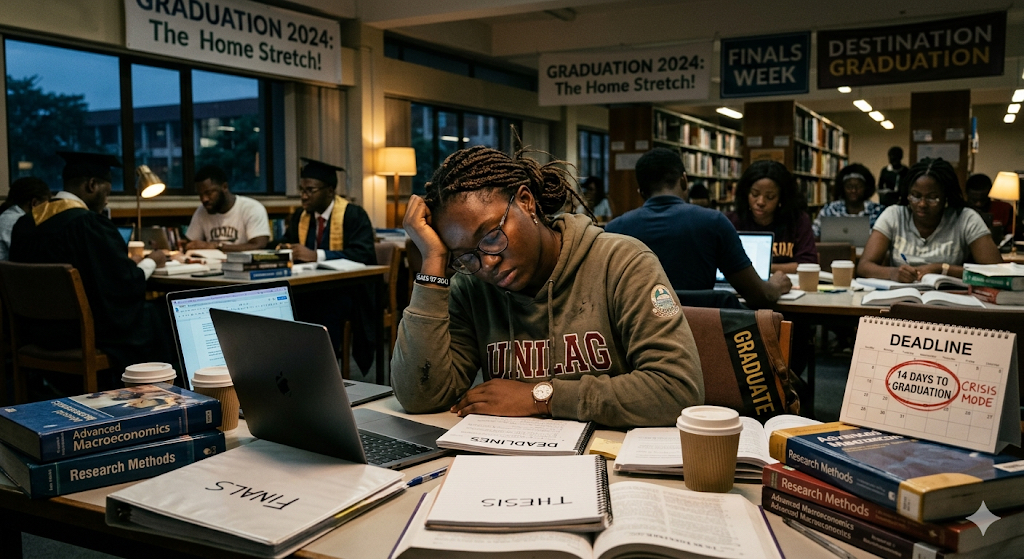
Burnout among university students before graduation is not simple exhaustion, it is a chronic state of physical, emotional, and mental depletion caused by prolonged academic stress. Persistent fatigue even after sleeping Loss of interest in studies and previously enjoyed activities
Emotional symptoms: irritability, sadness, feeling empty
Behavioral signs: avoiding friends, poor focus, skipping meals or over/under-sleeping
Outcomes: dropping out, failing courses, long-term anxiety or depressionThe problem is widespread and often invisible until students are already in crisis, months before exams or graduation.
The causes:
Heavy course loads and part-time work to pay bills Pressure for perfect grades from family and peers Poor time management leading to last-minute rushes Lack of rest, sleep, and recovery time No mandatory stress management education Counseling services underused or unavailable Curriculum design that encourages cramming over consistent learning Those responsible Multiple parties share responsibility, though blame is less useful than ownership University administration for not embedding mental health literacy, affordable counseling, and reasonable deadlines into academic culture.
Faculty & departments for ignoring signs of student distress, designing back-to-back high-stakes assessments, and not normalizing extensions or mental health days. Families and cultural expectations for demanding perfect grades without acknowledging realistic limits. Students themselves (partially) for overcommitting, avoiding help, or neglecting rest, but this is often a symptom, not a root cause. Social media platforms & peer culture for amplifying comparison and hustle culture without showing real struggle.
Each group must acknowledge their role in creating or ignoring the conditions that lead to burnout.
Recommendation
Level Action Individual (student) Break study into small tasks Sleep 7–9h, eat regularly, light exercise ,Say no to extra activities ,Use counseling & support groups Peer & social Form study-rest accountability pairs, Limit social media scrolling, Normalize talking about exhaustion University Free, accessible counseling (online or walk-in), Stress management workshops required in first year, Flexible deadlines and “wellness days” off class, Reduce high-stakes exam weight in final year Family, Ask about well-being before grades, Avoid pressure around “perfect” performance, Help with financial planning to reduce part-time work hours Recovery plan (if already burned out)Talk to someone (friend, counselor, family) within 48h. Take a short break (2–3 days off from studying).
Adjust goals: passing is okay, perfection is not required.Use school support services (academic advising, mental health).
Have you ever felt burned out but thought it was just ‘normal student stress’?
What made you realize it was more serious?
This week, check on one classmate not with “Are you okay?” but with “When did you last rest without guilt?” Share your own small recovery habit (e.g., 10-min walk, no-phone dinner). Change starts when we stop normalizing exhaustion as a badge of honor.
