
AN EXPLAINER
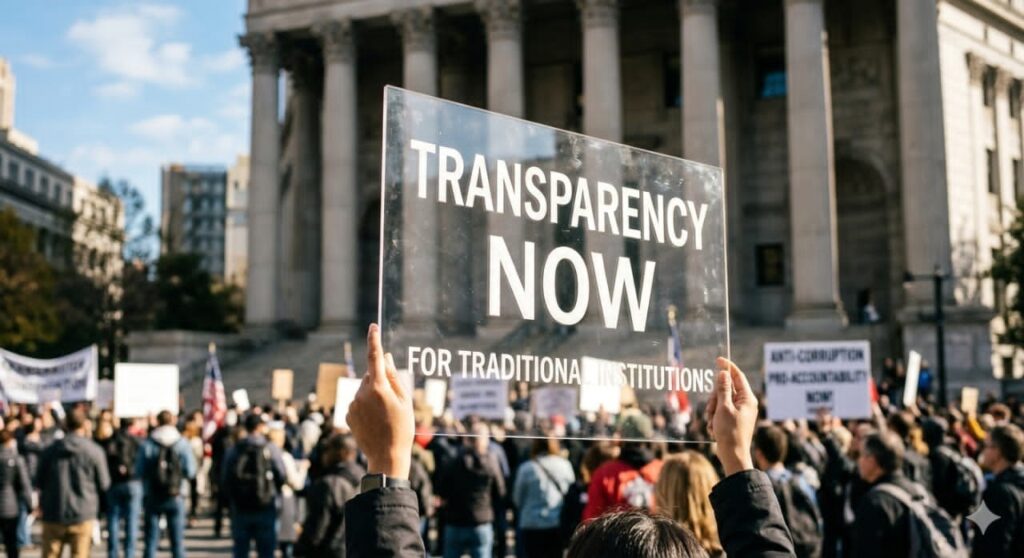
In recent years, public confidence in traditional institutions has declined significantly. Governments, religious organizations, educational systems, and mainstream media, once regarded as pillars of authority, are now increasingly questioned. Trust is no longer assumed, it must be earned and consistently maintained. This shift is not sudden. It reflects accumulated public experiences, evolving societal expectations, and the influence of digital technology, which has transformed how people access and interpret information.
DIAGNOSING THE PROBLEM
At the core of this issue is a growing credibility gap. Many individuals no longer accept institutional decisions or information at face value. Instead, they question motives, verify claims independently, and, in some cases, reject institutional authority altogether.
For example, when official statements on economic conditions or public policies differ from citizens’ everyday experiences, skepticism emerges. A citizen facing rising living costs may find it difficult to trust optimistic economic reports, creating a disconnect between institutional messaging and lived reality.
CAUSES OF DECLINING TRUST
Several factors contribute to this erosion of confidence:
- Lack of Transparency
Modern audiences expect openness. When institutions fail to communicate clearly or appear to withhold information, it creates suspicion and doubt.
- Corruption and Mismanagement
Repeated cases of corruption, abuse of power, and poor leadership weaken public confidence. When accountability is absent, trust declines not just in individuals, but in entire systems.
- Media Distrust and Misinformation
The rise of digital media has exposed inconsistencies and biases in traditional reporting. When mainstream media is perceived as selective or inaccurate, audiences turn to alternative sources.
- Unmet Public Expectations
- Institutions are expected to address key societal challenges such as unemployment, insecurity, and economic instability. When these expectations are not met, frustration grows.
- Rise of Alternative Voices
Social media platforms have shifted information control. Individuals, influencers, and independent creators now shape public opinion, reducing reliance on traditional institutions.
- Generational Shift
Younger generations tend to question authority more critically. They demand accountability, inclusiveness, and responsiveness, and are less likely to accept institutional decisions without scrutiny.
Accountability: Who Is Responsible
The decline in trust is not caused by a single factor,it reflects shared responsibility:
- Institutions themselves, when they fail to act transparently or address internal issues
- Leaders and officials, whose actions directly influence public perception
- Media organizations, when reporting lacks balance or credibility
- Digital platforms, which amplify both accurate information and misinformation
The public, which sometimes spreads unverified information, further weakening trust systems
This interconnected responsibility shows that rebuilding trust requires action from multiple levels.
IMPATCT OF DECLING TRUST
The erosion of trust has wide reaching consequences:
- It Increased skepticism toward authority and official information
- Greater reliance on unofficial or alternative sources
- Growth of public criticism, activism, and dissent
- Weakening of institutional influence and effectiveness
For instance, when people no longer trust official health or security information, they may rely on informal sources, which can sometimes spread inaccurate or harmful narratives.
RECOMMENDATIONS
- Rebuilding Public Confidence
- Restoring trust is possible but requires consistent and deliberate effort
- Institutions must prioritize transparency and open communication
- Stronger systems of accountability and anti corruption measures must be enforced
- Media organizations should maintain accuracy, balance, and ethical reporting standards
- Institutions should actively engage with the public, listening to concerns and feedback
- Adoption of modern communication tools and digital strategies to remain relevant and accessible, Trust cannot be restored through statements alone, it must be demonstrated through actions over time.
FINAL THOUGHTS: TRUST IN A CHANGING WORLD
The decline in trust in traditional institutions reflects a broader transformation in society. People are more informed, more connected, and more willing to question authority than ever before.
While this shift presents challenges, it also creates an opportunity. Institutions that adapt, become more transparent, and prioritize accountability can rebuild stronger, more meaningful relationships with the public.
The critical question remains: in an age of information overload, who will people choose to trust, and why?
The answer will shape the future of governance, media, and societal stability.
