
AN INTERVIEW
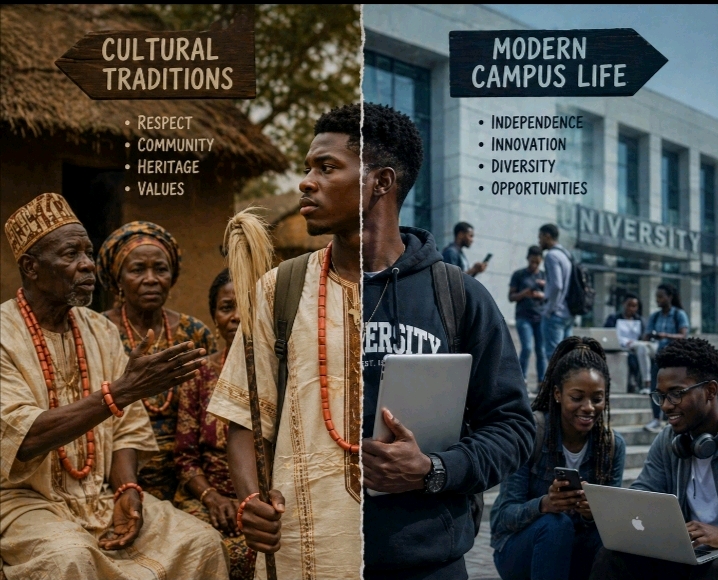
The clash between cultural traditions and modern campus life is no longer just a theoretical discussion. It is a lived reality for many Nigerian university students, often creating confusion, conflict, and identity struggles.
Across campuses, students report increasing pressure to abandon traditional values in order to “fit in” with evolving social norms. A 2023 survey by the National Bureau of Statistics on youth social behaviour found that over 60% of university students feel influenced to change aspects of their cultural identity, including dressing, language, and relationship values, after gaining admission.
This raises a critical question: Is campus life reshaping identity at the expense of cultural heritage?
The core issue lies in the growing disconnect between students’ cultural upbringing and the realities of campus life. Universities expose students to diverse lifestyles ranging from fashion choices to dating culture that often conflict with traditional expectations from home.
For example, dress codes that reflect cultural modesty are increasingly replaced by trends driven by social media and peer validation. Similarly, traditional views on relationships are frequently challenged by more liberal attitudes on campus.
Several factors are driving this shift:
Platforms like TikTok and Instagram promote lifestyles that may not align with local cultural values Students often conform to dominant campus trends to avoid social isolation.
Many institutions lack structured platforms that actively promote indigenous values and cultural education.
Limited communication between students and families creates a gap where guidance is absent..
Responsibility does not lie with students alone.
Universities have failed to create balanced environments where cultural identity is preserved alongside modern exposure.
Media platforms amplify Westernized lifestyles without contextual sensitivity.
Policy makers in education have not prioritized cultural integration within academic and social programming.
Without accountability from these stakeholders, the tension will continue to deepen.
Addressing this issue requires intentional action:
Universities should introduce cultural orientation programs and student-led cultural associations with real institutional support.
Media literacy should be integrated into curricula to help students critically evaluate external influences.
Parents and guardians must maintain active communication, reinforcing values even from a distance.
Government and educational bodies should promote policies that preserve cultural identity within modern education systems.
The reality is clear. Students are not rejecting culture outright; they are navigating a complex space without guidance.
So the conversation must shift from blame to balance.
How can Nigerian campuses become spaces where tradition and modernity coexist, rather than compete?
Until this question is seriously addressed, the identity crisis among students will remain unresolved.
