
EXPLAINER
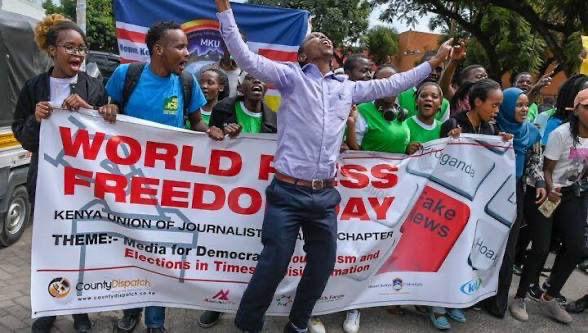
Every day, journalists across Africa report on politics, business, education, sports, and social issues. They attend press conferences, investigate stories, interview sources, and provide information that helps citizens understand what is happening around them.But not all journalists work under the same conditions.
While some African countries offer relatively open environments for the media, others place significant restrictions on how journalists operate. This difference raises an important question: what exactly is press freedom, and why does it vary across the continent?
What Is Press Freedom?
Press freedom refers to the ability of journalists and media organizations to gather, publish, and distribute information without undue interference, censorship, intimidation, or punishment.
In a country with strong press freedom, journalists can investigate public issues, question government officials, and report on matters of public interest without fear of harassment.
Press freedom does not mean journalists can publish anything without responsibility. It simply means that the media can perform its role without unfair restrictions.
Why Is Press Freedom Important?
The media is often described as the “watchdog” of society. Journalists help citizens stay informed about government actions, economic developments, elections, public services, and social issues. Through investigative reporting, the media can expose corruption, highlight injustice, and draw attention to problems that might otherwise go unnoticed.
Without press freedom, access to reliable information becomes more limited, making it harder for citizens to make informed decisions.
Why Does Press Freedom Differ Across Africa?
Africa is home to more than fifty countries, each with its own political system, history, laws, and media environment.
As a result, press freedom varies significantly from one country to another.In some countries, constitutional protections and legal reforms have strengthened media independence. Journalists are generally able to report freely, although challenges still exist.In others, restrictive laws, political pressure, arrests, censorship, or economic constraints can make independent reporting more difficult.
The level of press freedom often depends on factors such as democratic institutions, legal protections, government transparency, and the strength of civil society organizations.
What Challenges Do African Journalists Face?
Many journalists across the continent face obstacles that can affect their work.Some encounter legal challenges, including restrictive media laws or defamation regulations. Others experience intimidation, online harassment, or pressure from powerful individuals and institutions.
Economic challenges also play a role. Independent media organizations often struggle with funding, advertising revenue, and operational costs. Financial difficulties can affect the ability of news outlets to remain independent.
The rise of misinformation and fake news has created additional pressure, forcing journalists to work harder to verify facts and maintain public trust.
Has Press Freedom Improved?
The answer is both yes and no. Over the years, several African countries have introduced reforms that support media freedom and access to information. Digital technology and social media have also expanded opportunities for citizens and journalists to share information more quickly than ever before.
However, concerns remain in some parts of the continent where journalists continue to face restrictions, legal challenges, or security risks.Progress has been uneven, with improvements in some countries and setbacks in others.
The Role of Digital Media
The internet has transformed journalism across Africa. Online news platforms, podcasts, blogs, and social media channels have created new opportunities for storytelling and public engagement. Young journalists now have more platforms to publish content and reach audiences.
At the same time, digital spaces have introduced new concerns, including online abuse, cybercrime regulations, and the rapid spread of false information.The challenge is finding a balance between protecting online spaces and preserving freedom of expression.
Why Students Should Care
Press freedom is not just a concern for journalists. Students rely on accurate information to understand the world around them. Whether discussing politics, education, employment, or social issues, access to reliable news helps young people make informed decisions and participate meaningfully in society.
For students studying media, communication, political science, or related fields, understanding press freedom is especially important because it shapes the environment in which future journalists and communicators will work.
The Bottom Line
Press freedom remains one of the most important pillars of a democratic society. Across Africa, the media continues to play a vital role in informing citizens, holding institutions accountable, and promoting public debate.While the level of press freedom differs from country to country, the principle remains the same: a society functions best when people have access to accurate information and journalists can report without fear.
As Africa’s media landscape continues to evolve, the conversation about press freedom will remain central to the future of journalism, democracy, and public accountability across the continent.
