
EXPLAINER
INTRODUCTION
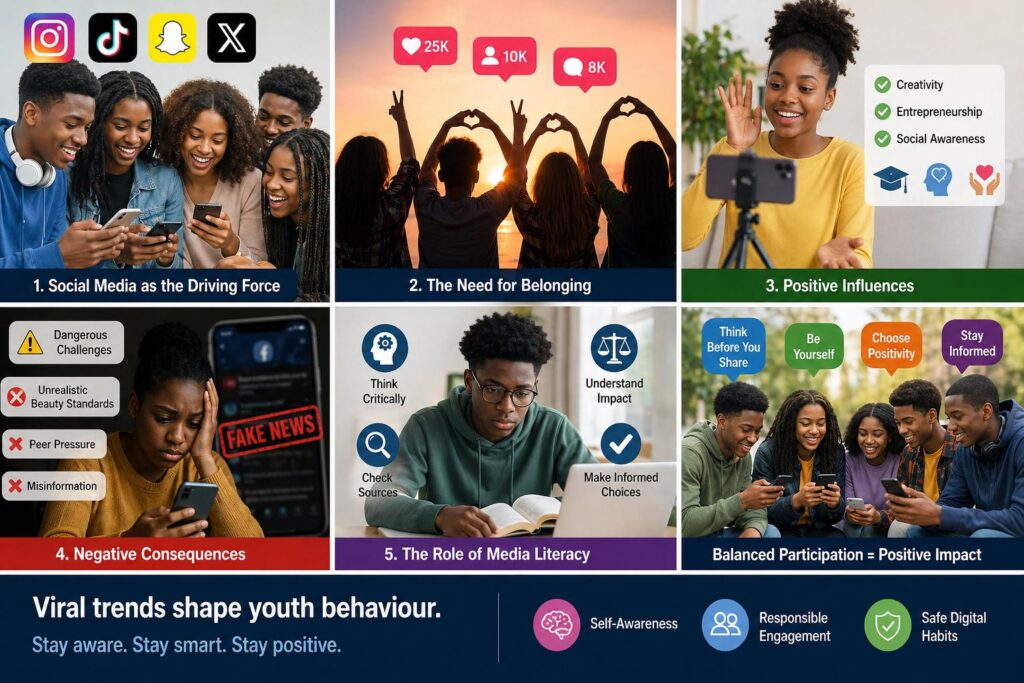
Viral trends refer to ideas, challenges, videos, or behaviours that spread rapidly across social media platforms and gain widespread attention within a short period. Among young people, especially students and teenagers, these trends play a major role in shaping opinions, lifestyle choices, and everyday behaviour. The influence of viral trends can be both positive and negative depending on the nature of the content being circulated.
POSITIVE INFLUENCE OF VIRAL TRENDS
Some viral trends promote creativity, learning, and self-expression. Educational challenges, motivational content, and skill-based trends can encourage young people to develop new abilities or explore areas of interest. For example, trends that focus on studying habits, productivity, or digital skills can inspire students to improve their academic performance and personal development. Viral movements that promote social awareness, such as environmental protection or mental health advocacy, can also positively shape youth behaviour by encouraging responsibility and empathy.
NEGATIVE INFLUENCE OF VIRAL TRENDS
Despite their benefits, viral trends can also negatively affect youth behaviour. Some trends promote risky or harmful activities that young people may imitate without fully understanding the consequences. The desire for attention, likes, and social validation can push students to engage in unsafe or inappropriate behaviour. In some cases, constant exposure to viral content can also reduce attention span, affect academic focus, and encourage unhealthy comparison with others online. This may lead to pressure, anxiety, or reduced self-esteem among youths.
FACTORS THAT INCREASE INFLUENCE
The impact of viral trends is often stronger among youths due to peer pressure, curiosity, and the need for social acceptance. Social media algorithms also play a role by repeatedly exposing users to similar content, making trends seem more popular and important than they actually are.
CONCLUSION
Viral trends have a powerful influence on youth behaviour, shaping how young people think, act, and interact with the world. While some trends can be educational and inspiring, others may lead to risky or unhealthy behaviour. It is important for young people to develop critical thinking skills and make conscious decisions about the content they engage with online.
