
A NEWS
In recent years, memes have become a powerful part of digital communication, especially among young people. What started as simple jokes and humorous images has now evolved into a tool for expressing opinions, including political views. Among university students, memes are not just for entertainment—they are also used to comment on social and political issues.
A meme is typically an image, video, or piece of text that is copied and spread rapidly online, often with slight variations. Students share memes on platforms like WhatsApp, Instagram, and X (formerly Twitter), using them to react to events, criticize leaders, or highlight societal problems.
One reason memes are effective in political communication is their simplicity. They present complex issues in a short, humorous, and relatable way. Instead of reading long articles or listening to debates, students can quickly understand a situation through a meme. This makes political information more accessible, especially to young audiences.
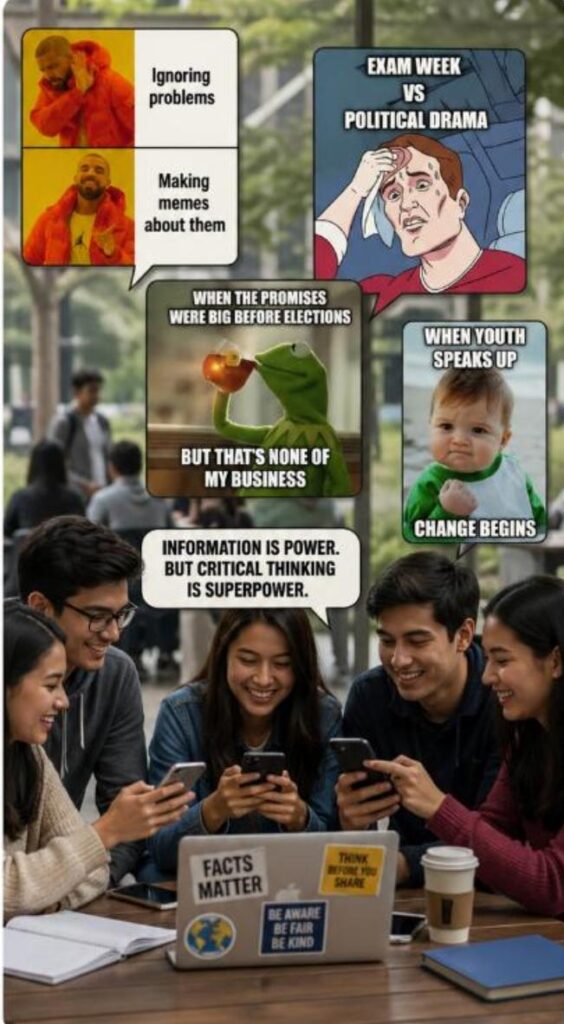
Memes also encourage participation. Students who may not normally engage in political discussions can easily share or create memes, thereby becoming part of the conversation. In this way, memes give young people a voice and a platform to express their views.
However, meme culture also has its downsides. Because memes are often humorous or exaggerated, they may oversimplify serious issues. In some cases, they can spread misinformation or create biased views about political figures and events.
Despite these challenges, memes remain an important part of modern communication. They reflect how young people interpret and respond to the world around them.
In conclusion, meme culture has transformed political communication among students. While it makes political discussions more engaging and accessible, it also requires critical thinking to separate humor from reality.
