
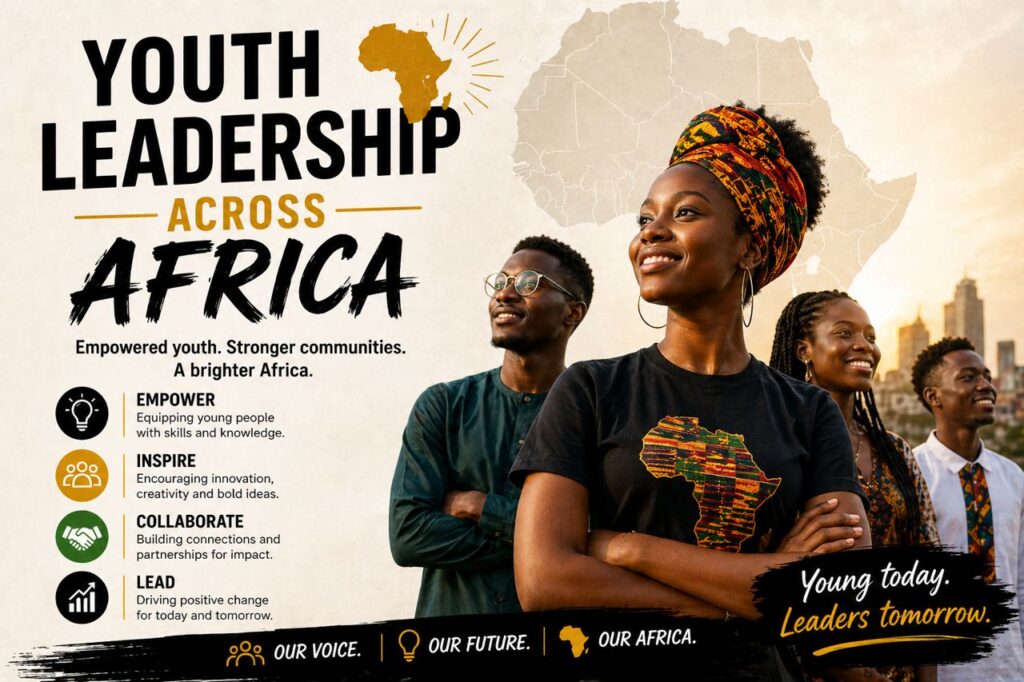
Youth Leadership Across Africa.
An Explainer
Across Africa, young people are no longer waiting for change — they are leading it. From community
development projects to political activism and digital innovation, youth leadership is becoming a
powerful force shaping the continent’s future.
This article explains what youth leadership in Africa looks like, why it matters, the challenges young
leaders face, and how it continues to grow.
What is Youth Leadership?
Youth leadership refers to the ability of young people to take initiative, influence others, and create
positive change in their communities or society. It can happen in many areas such as education,
politics, entrepreneurship, social impact, and technology.
In Africa, youth leadership often focuses on solving real-life problems like unemployment, inequality,
poor education systems, and social injustice.
Why Youth Leadership Matters in Africa.
Africa has one of the youngest populations in the world. This means young people make up a large
percentage of the population, and their ideas and actions have a strong impact on the continent’s
development.
Youth leadership is important because: It brings fresh ideas and innovation It promotes active
participation in governance and society It drives community development It prepares future leaders When young people lead, they help shape policies, influence decisions, and create opportunities for others.
Areas Where Youth Are Leading.
- Social Activism Many young Africans are leading movements that address social issues such as
human rights, gender equality, and justice. Through protests, campaigns, and advocacy, they raise
awareness and demand change. - Entrepreneurship and Innovation Young entrepreneurs across Africa are creating businesses that
solve local problems. From tech startups to small-scale enterprises, they are generating employment
and boosting economic growth. - Politics and Governance More young people are becoming involved in politics — either by running
for office, supporting campaigns, or using digital platforms to influence political decisions. - Digital and Media Influence Social media has given young Africans a strong voice. They use
platforms to educate, mobilize, and connect people across borders.
Challenges Facing Youth Leaders.
Despite their impact, young leaders in Africa face several obstacles: Limited access to funding and
resources Lack of mentorship and guidance Political and institutional barriers Societal expectations
and age bias Limited opportunities for leadership roles
These challenges can slow down progress and discourage participation.
The Role of Support Systems.
For youth leadership to grow, support is essential. Governments, organizations, and communities can
help by: Providing leadership training and education Creating opportunities for youth participation
Offering mentorship and funding support Encouraging inclusive policies
With the right support, young leaders can achieve even more.
The Future of Youth Leadership in Africa
The future of Africa is closely tied to its youth. As more young people gain access to education,
technology, and global opportunities, youth leadership will continue to expand.
There is a growing shift from passive participation to active leadership. Young Africans are not just
speaking they are acting, building, and leading change.
Conclusion
Youth leadership across Africa is a powerful and growing movement. Despite challenges, young people
are stepping forward to lead in different sectors and make meaningful contributions to society.
By supporting and empowering youth, Africa can unlock its full potential and build a stronger, more
inclusive future.
